Showing posts with label New Ds Diagnosis. Show all posts

Saturday, July 23, 2011

Five

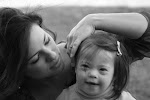
It's been five years today since this little girl arrived in our lives:
Each year it becomes more clear that Bridget's arrival (more to the point:  Bridget's Down syndrome diagnosis) brought fear and anxiety that was unwarranted.  Each year, it becomes more and more evident that we wasted time and energy feeling uncertain when we should have been celebrating.  

This little girl is so worth celebrating!

Bridget, you are everything I could ever have imagined, and more.  From every angle, and every vantage point, you are precious.  Your joy is contagious.  Your light is undeniable.  How lucky we are to love you!  Happy Birthday, my beautiful, sweet girl!


Tuesday, November 02, 2010

Living in the Light, Explained

When we merged Bridget's Light and Loving Alina, there was little question whether our new blog title would include the word light.  Our whole story revolves around it.

We couldn't have predicted how Bridget's arrival would change us, would enrich us.  Or how Bridget's light would lead us to Alina--and how Alina herself would further enrich us.  But it did, and they did.  Bridget and Alina have brought a special warmth and clarity to our family that we didn't know we were missing.  

With open eyes and open hearts, we now live a new truth.  We are keenly aware that all people are the same within.  Though none of us is "perfect", we are all perfectly made

We all have challenges...and gifts.  And each one of us adds to the whole.  Our youngest girls add in so many ways.  Above all, they've multiplied the goodness in our lives...in spades.

We've gained perspective--we see Life through a new lens.  We waste little time worrying about the superficial, and our home is filled with laughter and warmth.  Our two littlest girls are a huge part of that--they shine.

Things aren't always easy, or sparkly, at our house.  We're not exceptionally virtuous, though we try our best to live right and to be grateful for each day.  We're living an ordinary life, but we're aware, joyful and appreciative.  

We are Living in the Light.
 
These two little girls have blessed us beyond belief.  They're vibrant, beautiful people who are so very loved and enjoyed.

Please join us as our family story continues to unfold.  Day or night, you are welcome to come visit here.  Come laugh with us and learn with us, and be empowered.

There's a whole lot of darkness out there.  Let the light in...

Love, Lisa

*Alina was named by her birth parents...her name means light.

Saturday, October 30, 2010

New Baby Diagnosed with Down Syndrome--What Do I Say (Part II)?

Down Syndrome Diagnosis 101, What to Say to Others

Does your new baby have Down syndrome?  Have you wondered how to tell others about it? 

As parents, it is tough enough to navigate our own feelings when our child is diagnosed with Down syndrome, let alone manage other people's reactions. We've all wrestled with how and when we should reveal our child's diagnosis to others.  

We chose to adopt Alina, and everyone knew that she had Down syndrome.  But Bridget's diagnosis was a surprise.  Our first challenge was making calls from the hospital, and filling in all the details of her birth.  We were shocked, and still reeling from the additional stress that Bridget needed surgery as soon as she was born.  

Our next challenge was her birth announcement.  We felt we should tell our family and close friends about Bridget's diagnosis, and spent some time thinking about what to say, but thought they definitely needed to know.  Here is what we sent:
B R I D G E T
 Celtic meaning:  Strong, Resolute, Saint
                          
Dear Family and Friends,

For those of you who do not already know the events of the last several weeks, I thought I should explain…  

My water broke early in the morning on July 23 at just over 34 weeks into my fifth pregnancy.  We anticipated a quick delivery, and hurried to the hospital, but my labor (which was slow and steady) lasted most of the day. Just before 6 p.m., Bridget was born. Our beautiful little girl was pink, crying, moving vigorously and breathing completely on her own.  

As soon as she was born, though, we recognized that Bridget had an enlarged area by her umbilical cord. We learned right away that she would need surgery to correct the omphalocele (in her case, a small section of the small intestine was outside her abdomen and had to be placed back inside), and that she would be transported to Children’s Hospital later that night. In addition to the abdominal issue, we were told that Bridget displayed other characteristics typical of a baby with Down syndrome.  

We did not know any of this before she was born. The anxiety and worry about Bridget’s surgery and overall health were really tough at first and we went through the range of thoughts and emotions while adjusting to--and accepting--our new reality. As soon as we got to spend time with Bridget, though, the clouds parted. Chris and I looked at each other and smiled. She’s one of us…and she’s a perfect addition to our family.  

Please don’t be sad for us. We are not sad or disappointed. We hope you will feel the same as we do--we’re happy and proud!  

Bridget is a sweet baby and her name suits her perfectly. She's filled with quiet determination. She is so pure, and so strong (body and spirit)--she is amazing.  

Bridget recovered quickly from her surgery and spent several weeks working on feeding (a common issue in preemies and babies with Down syndrome). She exceeded the doctor’s expectations at every turn and touched us all with her sweet disposition and her vigor at the same time. She came home after one month in the hospital to much fanfare and we are enjoying her immensely. 

She is doing everything babies do at this point (mainly eating, sleeping and pooping--sometimes all at once!). She's about 6 1/2 pounds now, and eats like a champion. She loves her siblings and seems so happy to be at home.  

We look forward to sharing Bridget with all of you as she grows.  

Love,  

 Lisa & Chris

There was relief after sending out her birth announcements.  They were well-received and people were incredibly kind and supportive.  

But it was still hard to know how to talk about Bridget's diagnosis in public.  I remember thinking, "Am I required to tell ____ that Bridget was born with Down syndrome?" (Sometimes it was a friend I hadn't seen in a while, or a stranger in the grocery store, or even an acquaintance at the dance studio or the school.)

I wasn't sure
what to say, or how to say it. And then there were the many things people said to me that threw me for a loop.
 
So how do you talk to someone about your child's diagnosis for the first time?  What do you say when someone casually asks about some facet of your child having Ds?  Do you have a quick comeback when someone makes an insensitive or ignorant statement?  Or, do you have comments "in the bag" for just such an occasion?

I decided that I would tell people if I felt like it, and if it made sense. If I didn't feel like explaining, I just didn't say anything about her diagnosis. And I made a promise to myself that I would not feel badly about that. In other words, I started to cut myself some slack. 

I am a great advocate for Bridget and Alina. I love them and believe in them wholeheartedly, and will speak up when it makes sense to do so--but I don't always have to take on the world. (Some of our best advocacy work is just being out there, providing one example of a loving family living a happy and full life which includes Down syndrome.)

People make insensitive comments so often without even realizing it. 
When Bridget was a baby, and I was still trying to absorb her diagnosis and figure out how to tell others about it, I started to understand that we all need to find things to say that fit our personality as well as the situation.

I used to just stand there--a little stunned--when someone made a comment that hurt (you can't always see it coming). You replay the situation in your head for days, trying to figure out what you should have said.


I now have all sorts of statements in my "bag". 
I'm usually straightforward and positive, and I remind myself that each of these situations is a chance for me to advocate for my girls and for other people who have a diagnosis of Down syndrome (really, for people with a diagnosis of any type).

It is important for all of us (parents and family members) to be well versed on the basics (why Ds occurs, the range of delays associated with the diagnosis, physical features, common health issues, improvements in medical care for people with Ds, current terminology, new opportunities & advancements, etc.).  People will ask about those things. Most people will not have personal experience related to Down syndrome.  Your child might be the first person they've encountered with the diagnosis.


Here are some ideas:


If someone seems to be wondering whether she has a diagnosis, I'll just come right out with it: "Bridget has Down syndrome". In case they can't see for themselves, I always follow with: "She is awesome".

I often ask the person if they have any questions about her diagnosis. It takes some of the stigma away when we don't make excuses or apologies. (She is who she is, and she is amazing.)


When people comment about physical features or health issues ("she doesn't look like she has Down syndrome" or "she is so high-functioning...she must not have a severe case"), I say, "There is no such thing as a mild case of Down syndrome. You either have it or you don't. Some people with Down syndrome have more significant delays than others, and some have more serious health concerns. As with all people, there is a huge range in physical characteristics, health and abilities in people with Down syndrome."


A shorter version: "That is a stereotype. People with Down syndrome, like everyone else, have a range of abilities and challenges" or
"Everyone has strengths and challenges. She does, too."

I also say things like: "We know much more about Down syndrome today than was known even 20 years ago. People with Ds are capable of so much more than ever thought possible. I'd never want to dictate to any of my children what someone else thinks they can't do. Only Alina can tell us how far she will go and what she will accomplish."

I will always highlight my daughter's personality, her abilities and potential, and the fact that she is a child--a person with a diagnosis--not the diagnosis itself.
  

While there are some things that are unique about her because she has Down syndrome, she is just like everyone else in all the important ways.

Feel free to use any of the above information (in whole, or pieces and parts).

New Baby Diagnosed with Down Syndrome--What Do I Say?

Down Syndrome Diagnosis 101, What to Say

Do you know someone who has received a diagnosis of Down syndrome for a new baby?  Are you wondering what to say and do?

Even well-meaning friends and family members tend to stumble over words, and often don't know how to help, or how to process the diagnosis themselves.

It is important to remember that every new parent desires and deserves congratulations on the birth of a new baby.  Parents who have been told that their baby has Down syndrome should be shown the same kindness as every other new parent--along with a little extra awareness and tact. 

A diagnosis of Down syndrome may (or may not) be difficult for parents to process and absorb.  If there are any additional health concerns for the baby, the early days may be especially frightening for the parents and family.

Some parents accept the diagnosis quickly, while others really struggle.  Both are completely normal reactions when unexpected information arrives along with a new baby.  

Look to the parents for cues.  A general rule is to welcome a child with Down syndrome (or any other diagnosis) the same way you would welcome any baby.  Be sensitive, supportive and positive.   

Important things to consider:  

(1) All babies should be celebrated, and all parents should be supported in welcoming new life.  

(2) There is no telling what an individual will accomplish in his or her lifetime--especially if that person is loved and valued and given every opportunity to succeed.   

(3) There is every reason to be hopeful. 

There are several sources for information on what to say and do when your friend's baby has a diagnosis of Down syndrome.  I'm linking to one blog post, which covers the topic particularly well.  Please visit the above link for more detail, but here are the highlights:
First, bring a gift (a receiving blanket, an adorable outfit, a rattle). Second, say “Congratulations!” or “Congratulations on the birth of your baby boy/girl!” or “Oh, (s)he’s beautiful!” Then ask to hold the baby (if you can). Just like you would with any other baby. The birth of a child is something to celebrate, and an extra chromosome doesn’t change that. Your friend’s baby is a gift, just as any baby is.

If you have positive experience with Down syndrome (i.e. a cousin or a friend had it, and they did fine/were adorable/whatever), share it.

{If you feel it is appropriate} Give them a copy of Kathryn Lynard Soper’s book Gifts. Because Gifts tells the stories of 63 different parents, it’s a chance for your friend to meet 63 people who’ve already been there. {There is also now a follow-up to Gifts, which is called Gifts 2, How People with Down Syndrome Enrich the World.}

Offer to care for other children if they have them. Bring in meals. Visit them at the hospital (and bring food that isn’t cafeteria food). Run errands for them. Ask how the baby is doing.

Try to get the terminology correct. In the U.S. it’s “Down syndrome,” not “Down’s syndrome” (because it’s named after the guy who identified it, not someone who had it). And it’s a “baby with Down syndrome,” not a “Down’s baby.” I know this sounds really nit-picky, but it’s important. This way, it’s a baby first, who happens to have Ds.

If there is a Down syndrome support group in your area, get a contact number for your friend. But don’t be surprised or hurt if she doesn’t contact them for a long time (or at all). Everybody has different needs.
Mostly, your friend just needs to know you love her and that you will love the baby too. 
I'd add two things:  First, please don't say, I'm sorry.  If you are concerned about your friend, say just that:  I am concerned about youI care about you and will be here for you.  But saying I'm sorry sounds as though the baby is a reason for sadness.  All babies should be celebrated, even if some of the details were unexpected.

Second, send your friend a link to one of the many family blogs which give examples of life with Down syndrome.  There is a huge support network out here for individuals and families living with Ds.  Your friend is not alone!


Please see the original post for a list of things NOT to say,  and check back here for tips on talking to others about your child's Down syndrome diagnosis.

Thursday, October 21, 2010

Flashback

There is a specific reason this story is posted today.  Check back tomorrow to learn the significance...

A Regular Baby (Bridget’s Arrival)

Written by big sister Sara on her 11th birthday (10.22.07)

Bridget looked just like a regular baby. She didn’t look any different than I thought she would. She was really beautiful and sweet, but I was worried about her health and what her life would be like. I was sad about all the things she might not be able to do. When I first saw her, I remember exploding into tears. I don’t know exactly why—I just did. I felt a mix of emotions. I was excited that she was born, but I was also a little disappointed. I was just hoping for a regular baby that we could take home in a couple of days.

I’m 11 and the oldest of five now that Bridget is here. I thought our family was big enough already with my two little brothers and one sister. When my mom told me she was pregnant with number five, I cried. I was happy—and surprised—and a little worried about the added responsibility of having another younger sibling. I had no idea how all of our lives would change the day she was born.

We were all supposed to wear pink t-shirts to the hospital to meet our new baby sister. But, she was almost six weeks early and the shirts we ordered had not arrived yet. My dad came to pick us up, and we had to hurry because Bridget needed surgery and was being moved to a different hospital. When we got there, I could tell my mom had been crying. She said Bridget would be fine, but that there was something other than the surgery that we needed to know about. “Bridget has Down syndrome,” she said quietly. We talked about what that meant as a family for only a few minutes before the nurses brought our new baby sister to see us.

As I looked at her, I felt sad that she couldn’t come home with us. I didn’t like seeing her in that plastic bed with all the tubes and wires attached to her. I wondered how long she would be in the hospital and what life would be like once she came home. I did not know what to expect.

After her surgery, I spent many hours at the hospital with Bridget. As I got to know her, I discovered that my baby sister was just a regular baby after all.

I realized that she was absolutely perfect. She was warm and soft and she smelled sweet. She even looked a lot like I did when I was a baby. I ached when I had to leave without her. I slept with clothes she had worn that we brought home to wash. I couldn’t wait to have her home with the rest of us.

We had all been so sad when Bridget was born needing surgery. And then there was the Down syndrome part. I didn’t know when we would be happy again, or if we would even be celebrating her birth. But, when she was finally able to leave the hospital--after a month-long stay--our whole family walked around her hospital floor like we were in a parade. My mom carried Bridget. We were all smiling and waving and proudly wearing our pink t-shirts. The nurses were clapping. It was a great celebration.

I know now that you can’t just hear an explanation of Down syndrome, or go on the computer and research it. The way to learn about Down Syndrome is to know someone with it.

Before Bridget was born, I never thought much about people with disabilities. I didn’t really pay attention. Now, when I see people with handicaps or disabilities, I pay more attention. I know they sometimes have to try harder to do the things most of us take for granted. I see people with disabilities as regular people who are just trying to learn and to enjoy life like everyone else--and I think of the families that love them.

To me, Bridget is the most beautiful baby in the world. She’s adorable and funny and she likes for me to hold her against my chest. I know she loves me because she smiles at me. I feel like we are going to be really close. I think Bridget was made especially for our family. She’s like a puzzle piece that fits perfectly and makes us complete. We didn’t know it, but we were waiting for her all along.

Sunday, October 17, 2010

The Crystal Ball

At the time of our child's diagnosis, how many of us wished we had a crystal ball to see what the future would hold?  How many of us worried about how Down syndrome would affect our lives? 

But then how many of us felt the fear and sting (that came along with the diagnosis) begin to fade as we realized that Down syndrome was only one facet of our child?  How many of us have realized that Down syndrome has not been nearly the deterrent we'd thought it would be? 

We are the crystal ball for families with a new diagnosis.  All of the individuals and families already living with Down syndrome are the glimpse into the future.

I've written about how our reality is different from what I had first envisioned and feared, and I have read many other accounts from parents, grandparents, and siblings of what they wish they had known from the outset. 

Open Letter to Parents Facing a Diagnosis of Down Syndrome on Finnian's Journey, and A Conversation Between Me Then and Me Now on Raising Reid are just two examples of parents sharing what they have learned along the way.   And the booklet What Parents Wish They'd Known, published by The Segullah Group, is a lovely compilation of reflections on raising a child with Down syndrome.

I would like to build a list of pages or posts that would be helpful for parents with a new Ds diagnosis.  What have you written or read that should be included?  (Anything other than Welcome to Holland... which will be the subject of a separate post here).
Please leave a comment with suggestions or ideas! 

Saturday, October 16, 2010

From the Heart

When I asked the kids to sit down and write a post for Down Syndrome Awareness Month, I had a feeling they would do so willingly.  What they each have written has come straight from their hearts (and heads), with no editing. 

Last year, to help get them started, I asked the kids to name three words to describe Bridget.  I asked them share details about Bridget, and how they felt about having her as a sister.  And we went in order, youngest to oldest--Emmy, Brian, Kyle, Sara.

This year, the kids chose the day they wanted to sit down and write.  They were asked to write on a topic of their choice, about either or both of their sisters--something which would offer readers a glimpse into our lives and how we feel about Bridget and Alina.

If you had a chance to talk to them at length about their sisters, you'd hear lots of funny stories and all about how their friends think their little sisters are "cool".  You'd hear about the little moments that make up our daily life, and about some bigger moments with much wider significance.

They have grown up loving and valuing their sisters with Down syndrome.  They've seen that Bridget and Alina are more like any other person than they are different, and just the same in the most important ways...

Sunday, May 23, 2010

Beautiful Bridget

Pictures from tonight of Miss Bridgey. She is growing up so fast!


Beautiful Bridget

Pictures from tonight of Miss Bridgey. She is growing up so fast!


Wednesday, February 03, 2010

Take My Hand--Isle of Capri

Isle of Capri
(For Kelle and Nella)

Take my hand
the both of you
There is something
I want you to see

There is a little girl dancing
with her big sister
and her momma and her daddy
on Isle of Capri

See the light
coming from over there
in the distance?
It is not the sun

There is a family whose love
has opened many hearts
and minds, whose light shines
so others may see

The littlest one dances
her feet in the sand
her heart soaring above
(Their hearts soaring above)

For they know the secret to happiness
That beauty is within
and that Love dissolves fear
(Love is big: there is nothing to fear)

There is no other way
This is the life meant for them
so they live it, fulfilled
knowing that they are blessed

They have learned
that each moment is precious
that each human is precious
and that neither should be taken for granted

They dance because they are the lucky ones
and because they know
that each unique footprint in the sand
is the mark of Goodness

***


This is your life. Grab it. Love it. Roll in it. Own it. Be grateful for it.

You sparkle, and we're all a little better for knowing you.


**This post was written for a family with a new Ds diagnosis. Follow the links in the title above to visit their blog and to read the incredibly moving birth story of Nella Cordelia.

Monday, November 23, 2009

Take My Hand...

So An Open Letter to Parents Facing a Diagnosis of Down Syndrome by Lisa Morguess of Finnian's Journey is now available on Mamapedia. For all the parents who are raising children with Down syndrome, and for all the parents who will be walking in our footsteps, this is awesome news. Please read it if you haven't already, and pass it along.

I was struck by one of the comments about Lisa's letter on the Mamapedia site:
Thank you, Lisa, for writing this. It is one of the most accurate articles about Down syndrome I have ever read. I have a grown son who was born with Down syndrome 26 years ago and wish I could have read your words when he was brand new. My son was in kindergarten when I wrote "Thoughts from the Middle of the Night" - It was meant to be a Thank You note to families who paved the way for the opportunities they created so he could show us his true potential. This Thanksgiving I will keep your words in mind as I celebrate the gratitude I feel among friends and family for my life and his. I feel so thankful for all our sons and daughters, and for mothers like you who reach out to us all.
And this made me think about how we are all reaching--out for our children, and toward one another--finding our way along this entangled and enchanted path.

I'm giving thanks, too, for all of it.

Here's an excerpt from the piece mentioned above (click here to read the rest of the story):

Thoughts From the Middle of the Night

Pamela Wilson

When my son was born and I was told he had Down syndrome, I did not cry for a long time. But when I saw a girl walking hand in hand with her little brother to the viewing window of the hospital nursery, I could not hold back my tears. I knew my daughter would never walk with her little brother that way. I knew he would never experience the small pleasures of life I always took for granted. In those minutes my heart was broken and I was overcome with sadness for both my children.

Now, almost six years later, I am filled with pity for the misinformed, heartbroken woman who sat crying in that cold hospital corridor, without hopes, dreams, or fight in her. She was wrong about so many things. That part of me continues to be reeducated: I am grateful for every new lesson I learn.

I am thankful to that woman. She found she did have some fight in her. She was not the first mother to fall in love with her newly-diagnosed child. She learned of brave and stubborn mothers who put themselves forward in the media to spread a message of hope. She let the memories of those mothers stir her into action. I shall always revere the mothers and fathers who reached out a hand, and who built a foundation of support, information, and resources for women like me to draw upon. What they did for their children transformed my son's life. They continue, still looking forward, always reaching back to help others.

I still reach back to the woman I was. I hold her gently and wish that in her grief she could hear me. "It's not like that. Please don't lose yourself in that sadness. Hold on, wait and see. So much of that grief is over things that are just not true." I know she has to sit there crying, and I don't know how long. I will wait with her and be a friend...

Take My Hand...

So An Open Letter to Parents Facing a Diagnosis of Down Syndrome by Lisa Morguess of Finnian's Journey is now available on Mamapedia. For all the parents who are raising children with Down syndrome, and for all the parents who will be walking in our footsteps, this is awesome news. Please read it if you haven't already, and pass it along.

I was struck by one of the comments about Lisa's letter on the Mamapedia site:
Thank you, Lisa, for writing this. It is one of the most accurate articles about Down syndrome I have ever read. I have a grown son who was born with Down syndrome 26 years ago and wish I could have read your words when he was brand new. My son was in kindergarten when I wrote "Thoughts from the Middle of the Night" - It was meant to be a Thank You note to families who paved the way for the opportunities they created so he could show us his true potential. This Thanksgiving I will keep your words in mind as I celebrate the gratitude I feel among friends and family for my life and his. I feel so thankful for all our sons and daughters, and for mothers like you who reach out to us all.
And this made me think about how we are all reaching--out for our children, and toward one another--finding our way along this entangled and enchanted path.

I'm giving thanks, too, for all of it.

Here's an excerpt from the piece mentioned above (click here to read the rest of the story):

Thoughts From the Middle of the Night

Pamela Wilson

When my son was born and I was told he had Down syndrome, I did not cry for a long time. But when I saw a girl walking hand in hand with her little brother to the viewing window of the hospital nursery, I could not hold back my tears. I knew my daughter would never walk with her little brother that way. I knew he would never experience the small pleasures of life I always took for granted. In those minutes my heart was broken and I was overcome with sadness for both my children.

Now, almost six years later, I am filled with pity for the misinformed, heartbroken woman who sat crying in that cold hospital corridor, without hopes, dreams, or fight in her. She was wrong about so many things. That part of me continues to be reeducated: I am grateful for every new lesson I learn.

I am thankful to that woman. She found she did have some fight in her. She was not the first mother to fall in love with her newly-diagnosed child. She learned of brave and stubborn mothers who put themselves forward in the media to spread a message of hope. She let the memories of those mothers stir her into action. I shall always revere the mothers and fathers who reached out a hand, and who built a foundation of support, information, and resources for women like me to draw upon. What they did for their children transformed my son's life. They continue, still looking forward, always reaching back to help others.

I still reach back to the woman I was. I hold her gently and wish that in her grief she could hear me. "It's not like that. Please don't lose yourself in that sadness. Hold on, wait and see. So much of that grief is over things that are just not true." I know she has to sit there crying, and I don't know how long. I will wait with her and be a friend...

Sunday, October 04, 2009

Bridget - A Beautiful Life


Welcome to anyone who is just finding us through the Respect Life materials!

I was contacted earlier this year by the United States Conference of Catholic Bishops for our permission to use Bridget's image (specifically, this picture I took of Chris and Bridget one relaxed and happy morning in the spring of 2008) in the Respect Life materials for this year. For those of Catholic faith, this--the first Sunday in October--is Respect Life Sunday.

Though we are not Catholic--and don't discuss our religious or political beliefs here--
we do feel that Life itself is precious and that every life has value.

I've written here about my own philosophy on the inherent goodness in the world, and in people, and about my feelings on gratitude and "reverence". I don't discuss the moral and ethical considerations of prenatal testing or termination, and I try to stay out of debates about those issues. Bridget's Light is meant to educate, comfort and inspire. It is where I advocate for Bridget and for other people and families living with Down syndrome.

I will say openly that we did not have prenatal testing with any of our children because we felt we were prepared to handle and embrace whatever came our way. We feel that Life is a gift, and that Bridget is a gift.

We see the merit in many different religions and spiritual (or personal) belief systems, and we are honored that Bridget's picture was selected to represent the value, worth and dignity of all people.

Today, as every other day, we are celebrating Bridget and celebrating Life. We are grateful for Bridget--for her smile, for her presence in our lives, for everything about her.
***


Coming up this week on Bridget's Light: Describing Bridget--Thoughts from Her Siblings

Bridget - A Beautiful Life


Welcome to anyone who is just finding us through the Respect Life materials!

I was contacted earlier this year by the United States Conference of Catholic Bishops for our permission to use Bridget's image (specifically, this picture I took of Chris and Bridget one relaxed and happy morning in the spring of 2008) in the Respect Life materials for this year. For those of Catholic faith, this--the first Sunday in October--is Respect Life Sunday.

Though we are not Catholic--and don't discuss our religious or political beliefs here--
we do feel that Life itself is precious and that every life has value.

I've written here about my own philosophy on the inherent goodness in the world, and in people, and about my feelings on gratitude and "reverence". I don't discuss the moral and ethical considerations of prenatal testing or termination, and I try to stay out of debates about those issues. Bridget's Light is meant to educate, comfort and inspire. It is where I advocate for Bridget and for other people and families living with Down syndrome.

I will say openly that we did not have prenatal testing with any of our children because we felt we were prepared to handle and embrace whatever came our way. We feel that Life is a gift, and that Bridget is a gift.

We see the merit in many different religions and spiritual (or personal) belief systems, and we are honored that Bridget's picture was selected to represent the value, worth and dignity of all people.

Today, as every other day, we are celebrating Bridget and celebrating Life. We are grateful for Bridget--for her smile, for her presence in our lives, for everything about her.
***


Coming up this week on Bridget's Light: Describing Bridget--Thoughts from Her Siblings

Saturday, October 03, 2009

Seeing the Possiblity in Bridget

When Bridget was unexpectedly born with Down syndrome, we were unsure of what that meant both for her, and for us. We had no real-life point of reference.

Despite an increase in public discourse and media attention in the past few years, Down syndrome itself is still largely misunderstood by the general public. Most people do not have an accurate idea of what it is like to raise a child with Ds today.
Early intervention, improved health screenings and treatments, inclusion in mainstream classrooms and in society—along with a greater understanding of the potential and worth of individuals with Ds—have contributed to a better life and brighter future for those with Ds. Yet misconceptions and inaccuracies abound not only within our schools and neighborhoods, but also within the medical community.

I am committed to getting accurate information and our real-life experience out there circulating in the world outside our home. I want others to know all that Bridget is and all she has brought to our lives.

It seems like common sense, but apparently it is not: expectant parents deserve up-to-date, unbiased and balanced information about the condition (delivered in a considerate manner), although many are still offered inaccurate information which paints a dim picture of the life and potential of people with Ds
. (People are shocked to hear of the incredibly high termination rates of Down syndrome pregnancies--estimated between 90-95% of those prenatally diagnosed--but it seems that many expectant parents are making choices based on limited information and stereotypes which unfairly highlight potential challenges in the life of a person with Down syndrome rather than highlighting the potential in the person.)

Reading about Down syndrome or learning about the condition in the absence of a person with the diagnosis is not seeing the whole picture. When Bridget was born, we knew very little about Down syndrome. We were initially told many things that may be true for some people with Ds, but are not the reality for us. Now Bridget is the one doing the teaching.
And we are listening...closely.
***

We have learned so much from Bridget in these past three years. The following is taken from an article I wrote for our local board of developmental disabilities:

Seeing the Possibility in Bridget

Three years ago, our family was sitting in a hospital room with heavy hearts, looking at a beautiful little girl in a tiny bed and wondering what challenges she would face.

When Bridget was a newborn, we learned about Down syndrome through what we read or were told by others. As Bridget has grown, she’s shown us all far more about herself—as well as Down syndrome, and what it’s like to live with a disability—than any textbook or person could have.


Bridget does not see herself as challenged. She is just a kid—being and doing. Like everyone else, Bridget has her own set of skills and challenges. Like everyone else, she is also full of dimension and potential.


Today, Bridget is a happy, healthy and secure three-year-old who continues to reach milestones on her own terms. She’s growing, learning new things, making friends and developing and a strong sense of herself. She is taking her first steps toward independence.


A few weeks ago, I helped Bridget climb up the stairs onto a school bus for her first day of preschool in our local school system. She is thriving.


Bridget is aware and energetic, with the whole world ahead of her. And although we are excited to see what’s in store for Bridget, we are not in a hurry to see where she’s going or even how she will get there. With a little extra support, she’ll make her way. And we will enjoy the journey right along with her.


Bridget is opening hearts and minds daily. She's showing others that all people have abilities, and that our human value is not based on our achievements.


We realize that we won’t know all of Bridget’s capabilities unless we give her the chance to learn, to build relationships, to be part of the community and to live her own life in her own unique way.


A friend once said that when you’ve see the light in someone the world may reject—a person who doesn’t fit the mold of what society says is perfect, successful or beautiful—then you begin to see that light everywhere. We understand that clearly now.


Bridget is interesting and funny and talented, all in her own right. She deserves the chance to make her own way in this world.


We’ve learned to never underestimate Bridget. What we know now is that she is not only capable of far more than most people would think, but also that she is a joyful, important, contributing member of our family and of the community who makes life brighter for all of us.


Given encouragement and opportunity, the world is full of possibilities for Bridget--and for the rest of us.

Seeing the Possiblity in Bridget

When Bridget was unexpectedly born with Down syndrome, we were unsure of what that meant both for her, and for us. We had no real-life point of reference.

Despite an increase in public discourse and media attention in the past few years, Down syndrome itself is still largely misunderstood by the general public. Most people do not have an accurate idea of what it is like to raise a child with Ds today.
Early intervention, improved health screenings and treatments, inclusion in mainstream classrooms and in society—along with a greater understanding of the potential and worth of individuals with Ds—have contributed to a better life and brighter future for those with Ds. Yet misconceptions and inaccuracies abound not only within our schools and neighborhoods, but also within the medical community.

I am committed to getting accurate information and our real-life experience out there circulating in the world outside our home. I want others to know all that Bridget is and all she has brought to our lives.

It seems like common sense, but apparently it is not: expectant parents deserve up-to-date, unbiased and balanced information about the condition (delivered in a considerate manner), although many are still offered inaccurate information which paints a dim picture of the life and potential of people with Ds
. (People are shocked to hear of the incredibly high termination rates of Down syndrome pregnancies--estimated between 90-95% of those prenatally diagnosed--but it seems that many expectant parents are making choices based on limited information and stereotypes which unfairly highlight potential challenges in the life of a person with Down syndrome rather than highlighting the potential in the person.)

Reading about Down syndrome or learning about the condition in the absence of a person with the diagnosis is not seeing the whole picture. When Bridget was born, we knew very little about Down syndrome. We were initially told many things that may be true for some people with Ds, but are not the reality for us. Now Bridget is the one doing the teaching.
And we are listening...closely.
***

We have learned so much from Bridget in these past three years. The following is taken from an article I wrote for our local board of developmental disabilities:

Seeing the Possibility in Bridget

Three years ago, our family was sitting in a hospital room with heavy hearts, looking at a beautiful little girl in a tiny bed and wondering what challenges she would face.

When Bridget was a newborn, we learned about Down syndrome through what we read or were told by others. As Bridget has grown, she’s shown us all far more about herself—as well as Down syndrome, and what it’s like to live with a disability—than any textbook or person could have.


Bridget does not see herself as challenged. She is just a kid—being and doing. Like everyone else, Bridget has her own set of skills and challenges. Like everyone else, she is also full of dimension and potential.


Today, Bridget is a happy, healthy and secure three-year-old who continues to reach milestones on her own terms. She’s growing, learning new things, making friends and developing and a strong sense of herself. She is taking her first steps toward independence.


A few weeks ago, I helped Bridget climb up the stairs onto a school bus for her first day of preschool in our local school system. She is thriving.


Bridget is aware and energetic, with the whole world ahead of her. And although we are excited to see what’s in store for Bridget, we are not in a hurry to see where she’s going or even how she will get there. With a little extra support, she’ll make her way. And we will enjoy the journey right along with her.


Bridget is opening hearts and minds daily. She's showing others that all people have abilities, and that our human value is not based on our achievements.


We realize that we won’t know all of Bridget’s capabilities unless we give her the chance to learn, to build relationships, to be part of the community and to live her own life in her own unique way.


A friend once said that when you’ve see the light in someone the world may reject—a person who doesn’t fit the mold of what society says is perfect, successful or beautiful—then you begin to see that light everywhere. We understand that clearly now.


Bridget is interesting and funny and talented, all in her own right. She deserves the chance to make her own way in this world.


We’ve learned to never underestimate Bridget. What we know now is that she is not only capable of far more than most people would think, but also that she is a joyful, important, contributing member of our family and of the community who makes life brighter for all of us.


Given encouragement and opportunity, the world is full of possibilities for Bridget--and for the rest of us.

Thursday, September 24, 2009

Bridget's Light

I've thought a lot recently about how best to explain and describe the impact Bridget has had on our lives. And then I realized I'd already written it. This is the essay I wrote, exactly as it appears in Gifts 2. This says it all...

Bridget’s Light


When our oldest two children were very small, we bought and renovated a traditional saltbox-style home to accommodate our growing family. The house sat on a gorgeous, deeply wooded lot which included a pleasing assortment of redbud, oak and buckeye trees. It took us a little while to figure out that while the house itself was perfect for us, the heavily treed lot, which initially attracted us to the property, meant that there were no visible sunsets and dark rooms even on the brightest of days.

When we designed our current home, I wanted windows in every room. “Light is vital,” I said to our architect as he drew up plans. “I don’t want to have to use lamps during the day any more.” He took the challenge seriously, as each and every contractor we met during the building process asked the same bewildered question: “You have how many windows?” It might’ve seemed excessive to some, but not to us. We’d lived in "the dark house" for several years before we fully recognized how much we crave and need natural light. It was several more years still before we realized that light itself would become a central theme in our lives.


As soon as we moved in to “the bright house,” everything seemed lighter in all senses of the word. Our four children (all under age six) were growing and thriving. We felt a new sense of buoyancy, a lightheartedness, and an unrestricted energy in our household. But as it turns out, the same windows that let light into a home can also let the darkness inside. Shortly after we moved, just as our lives were in full swing, I was diagnosed with a life-threatening brain tumor. Our world seemed to stop spinning, and dusk set in. It was an overwhelming, scary and sad time, and I secretly wondered whether night was closer than I cared to imagine.


The surgery to remove the tumor took my hearing on one side, but there were no other complications. I not only recovered quickly, but became pregnant with our fifth child just over a year later. We were thrilled and easily slipped back into a happy existence. Yet we were soon once again reminded that while windows provide openings to the outside world, they also let the outside world
in.

When Bridget was born with Down syndrome, none of us knew what to think, or how to feel. We had no experience with Down syndrome. We only knew the stereotypes, which brought sadness and concern. We grieved the loss of the happy time it should have been, and the loss of the baby we thought we were going to meet. But when we saw Bridget in the NICU for the first time, Chris and I both felt the heaviness and uncertainty begin to fade. We’d come around the corner from the nurses’ station to see her laying on a tiny hospital bed, covered in strong, unforgiving light from the warming lamps above. The lighting reminded me of a museum display featuring a rare and valuable piece of jewelry. As Bridget lay beneath it, nearly naked and fully illuminated, our hearts and lives were also laid bare. The light forced us to look at her, at ourselves, and our future. We watched her sleep peacefully, deserving and needing to be loved—just as any other baby. In that moment we realized Bridget is whole. We began to see her not as a child with a disability, but as a person, who would grow to express her own interests, talents, hopes and dreams—just as any other person. We began to understand her potential.


When the warming lights were turned off, there was still a glow that surrounded Bridget. She was radiant. It was unexpected, and we were both moved to tears when we realized that
she was the light.
***

The little girl with wispy ponytails who plays by my feet today does not yet know that I am writing about her. I’ve spent many hours these past few years telling our story, trying to show others that Down syndrome is not something to fear.

Down syndrome does not define Bridget. It is a part of her genetic make-up that is distinctly hers, but it is not her—and it doesn’t even begin to explain who she is. Bridget is a little masterpiece, with texture and depth and richness to spare. She gives freely of her effort and love. She is spirited and vibrant, content without being complacent. Others may feel that she has much to overcome, but Bridget doesn't seem to see it that way. In her we see honesty, lack of pretense, and uninhibited determination as she goes about her life with vigor and jubilance.


It’s interesting how a small amount of extra genetic material in Bridget translates into so much extra in all of our lives. Every day she encourages us to accept our own unique timelines for growth, and reminds us that what matters most isn’t what we achieve and when, but how true to ourselves we remain through the process of becoming. We’ve learned to accept that life is not always neat and tidy (or easy), and that plans can change mid-flight. We’ve also learned that situations we didn’t ask for or want often provide something we need.


A world turned upside-down reveals much about our perspective—it forces us to evaluate ourselves, the assumptions we make about one another, and our beliefs about ideals like success, beauty and perfection. And while Bridget has taught us significant life lessons, it is the small moments in everyday living with her—the countless little bursts—that fill our lives with meaning and joy. We spend our days together reflecting and accepting, learning, laughing, and loving. As a family, we’ve realized that we are not uncomfortable with disability; that we are not afraid of the darkness; and that everything seems better with more windows—and with Bridget in our lives. She has restored our sense of buoyancy.


Since our current home has natural light in abundance, it’s easy to forget that we once lived in a house with very little light. Likewise, it’s difficult to remember life before Bridget. What began with the bright light above her hospital bed and continued as her inner radiance has now developed into a substantial force of its own. Sometimes Bridget’s light is a high beam that illuminates clearly and at great range; at other times, it’s a gentle glow. But it is constant. With Bridget in our lives, our many-windowed home is luminous and vibrant once again. And even after night falls, sparkles are everywhere, filling every room and glittering with tiny flashes of light.

***

Bridget's Light

I've thought a lot recently about how best to explain and describe the impact Bridget has had on our lives. And then I realized I'd already written it. This is the essay I wrote, exactly as it appears in Gifts 2. This says it all...

Bridget’s Light


When our oldest two children were very small, we bought and renovated a traditional saltbox-style home to accommodate our growing family. The house sat on a gorgeous, deeply wooded lot which included a pleasing assortment of redbud, oak and buckeye trees. It took us a little while to figure out that while the house itself was perfect for us, the heavily treed lot, which initially attracted us to the property, meant that there were no visible sunsets and dark rooms even on the brightest of days.

When we designed our current home, I wanted windows in every room. “Light is vital,” I said to our architect as he drew up plans. “I don’t want to have to use lamps during the day any more.” He took the challenge seriously, as each and every contractor we met during the building process asked the same bewildered question: “You have how many windows?” It might’ve seemed excessive to some, but not to us. We’d lived in "the dark house" for several years before we fully recognized how much we crave and need natural light. It was several more years still before we realized that light itself would become a central theme in our lives.


As soon as we moved in to “the bright house,” everything seemed lighter in all senses of the word. Our four children (all under age six) were growing and thriving. We felt a new sense of buoyancy, a lightheartedness, and an unrestricted energy in our household. But as it turns out, the same windows that let light into a home can also let the darkness inside. Shortly after we moved, just as our lives were in full swing, I was diagnosed with a life-threatening brain tumor. Our world seemed to stop spinning, and dusk set in. It was an overwhelming, scary and sad time, and I secretly wondered whether night was closer than I cared to imagine.


The surgery to remove the tumor took my hearing on one side, but there were no other complications. I not only recovered quickly, but became pregnant with our fifth child just over a year later. We were thrilled and easily slipped back into a happy existence. Yet we were soon once again reminded that while windows provide openings to the outside world, they also let the outside world
in.

When Bridget was born with Down syndrome, none of us knew what to think, or how to feel. We had no experience with Down syndrome. We only knew the stereotypes, which brought sadness and concern. We grieved the loss of the happy time it should have been, and the loss of the baby we thought we were going to meet. But when we saw Bridget in the NICU for the first time, Chris and I both felt the heaviness and uncertainty begin to fade. We’d come around the corner from the nurses’ station to see her laying on a tiny hospital bed, covered in strong, unforgiving light from the warming lamps above. The lighting reminded me of a museum display featuring a rare and valuable piece of jewelry. As Bridget lay beneath it, nearly naked and fully illuminated, our hearts and lives were also laid bare. The light forced us to look at her, at ourselves, and our future. We watched her sleep peacefully, deserving and needing to be loved—just as any other baby. In that moment we realized Bridget is whole. We began to see her not as a child with a disability, but as a person, who would grow to express her own interests, talents, hopes and dreams—just as any other person. We began to understand her potential.


When the warming lights were turned off, there was still a glow that surrounded Bridget. She was radiant. It was unexpected, and we were both moved to tears when we realized that
she was the light.
***

The little girl with wispy ponytails who plays by my feet today does not yet know that I am writing about her. I’ve spent many hours these past few years telling our story, trying to show others that Down syndrome is not something to fear.

Down syndrome does not define Bridget. It is a part of her genetic make-up that is distinctly hers, but it is not her—and it doesn’t even begin to explain who she is. Bridget is a little masterpiece, with texture and depth and richness to spare. She gives freely of her effort and love. She is spirited and vibrant, content without being complacent. Others may feel that she has much to overcome, but Bridget doesn't seem to see it that way. In her we see honesty, lack of pretense, and uninhibited determination as she goes about her life with vigor and jubilance.


It’s interesting how a small amount of extra genetic material in Bridget translates into so much extra in all of our lives. Every day she encourages us to accept our own unique timelines for growth, and reminds us that what matters most isn’t what we achieve and when, but how true to ourselves we remain through the process of becoming. We’ve learned to accept that life is not always neat and tidy (or easy), and that plans can change mid-flight. We’ve also learned that situations we didn’t ask for or want often provide something we need.


A world turned upside-down reveals much about our perspective—it forces us to evaluate ourselves, the assumptions we make about one another, and our beliefs about ideals like success, beauty and perfection. And while Bridget has taught us significant life lessons, it is the small moments in everyday living with her—the countless little bursts—that fill our lives with meaning and joy. We spend our days together reflecting and accepting, learning, laughing, and loving. As a family, we’ve realized that we are not uncomfortable with disability; that we are not afraid of the darkness; and that everything seems better with more windows—and with Bridget in our lives. She has restored our sense of buoyancy.


Since our current home has natural light in abundance, it’s easy to forget that we once lived in a house with very little light. Likewise, it’s difficult to remember life before Bridget. What began with the bright light above her hospital bed and continued as her inner radiance has now developed into a substantial force of its own. Sometimes Bridget’s light is a high beam that illuminates clearly and at great range; at other times, it’s a gentle glow. But it is constant. With Bridget in our lives, our many-windowed home is luminous and vibrant once again. And even after night falls, sparkles are everywhere, filling every room and glittering with tiny flashes of light.

***