Saturday, October 03, 2009

Seeing the Possiblity in Bridget

When Bridget was unexpectedly born with Down syndrome, we were unsure of what that meant both for her, and for us. We had no real-life point of reference.

Despite an increase in public discourse and media attention in the past few years, Down syndrome itself is still largely misunderstood by the general public. Most people do not have an accurate idea of what it is like to raise a child with Ds today.
Early intervention, improved health screenings and treatments, inclusion in mainstream classrooms and in society—along with a greater understanding of the potential and worth of individuals with Ds—have contributed to a better life and brighter future for those with Ds. Yet misconceptions and inaccuracies abound not only within our schools and neighborhoods, but also within the medical community.

I am committed to getting accurate information and our real-life experience out there circulating in the world outside our home. I want others to know all that Bridget is and all she has brought to our lives.

It seems like common sense, but apparently it is not: expectant parents deserve up-to-date, unbiased and balanced information about the condition (delivered in a considerate manner), although many are still offered inaccurate information which paints a dim picture of the life and potential of people with Ds
. (People are shocked to hear of the incredibly high termination rates of Down syndrome pregnancies--estimated between 90-95% of those prenatally diagnosed--but it seems that many expectant parents are making choices based on limited information and stereotypes which unfairly highlight potential challenges in the life of a person with Down syndrome rather than highlighting the potential in the person.)

Reading about Down syndrome or learning about the condition in the absence of a person with the diagnosis is not seeing the whole picture. When Bridget was born, we knew very little about Down syndrome. We were initially told many things that may be true for some people with Ds, but are not the reality for us. Now Bridget is the one doing the teaching.
And we are listening...closely.
***

We have learned so much from Bridget in these past three years. The following is taken from an article I wrote for our local board of developmental disabilities:

Seeing the Possibility in Bridget

Three years ago, our family was sitting in a hospital room with heavy hearts, looking at a beautiful little girl in a tiny bed and wondering what challenges she would face.

When Bridget was a newborn, we learned about Down syndrome through what we read or were told by others. As Bridget has grown, she’s shown us all far more about herself—as well as Down syndrome, and what it’s like to live with a disability—than any textbook or person could have.


Bridget does not see herself as challenged. She is just a kid—being and doing. Like everyone else, Bridget has her own set of skills and challenges. Like everyone else, she is also full of dimension and potential.


Today, Bridget is a happy, healthy and secure three-year-old who continues to reach milestones on her own terms. She’s growing, learning new things, making friends and developing and a strong sense of herself. She is taking her first steps toward independence.


A few weeks ago, I helped Bridget climb up the stairs onto a school bus for her first day of preschool in our local school system. She is thriving.


Bridget is aware and energetic, with the whole world ahead of her. And although we are excited to see what’s in store for Bridget, we are not in a hurry to see where she’s going or even how she will get there. With a little extra support, she’ll make her way. And we will enjoy the journey right along with her.


Bridget is opening hearts and minds daily. She's showing others that all people have abilities, and that our human value is not based on our achievements.


We realize that we won’t know all of Bridget’s capabilities unless we give her the chance to learn, to build relationships, to be part of the community and to live her own life in her own unique way.


A friend once said that when you’ve see the light in someone the world may reject—a person who doesn’t fit the mold of what society says is perfect, successful or beautiful—then you begin to see that light everywhere. We understand that clearly now.


Bridget is interesting and funny and talented, all in her own right. She deserves the chance to make her own way in this world.


We’ve learned to never underestimate Bridget. What we know now is that she is not only capable of far more than most people would think, but also that she is a joyful, important, contributing member of our family and of the community who makes life brighter for all of us.


Given encouragement and opportunity, the world is full of possibilities for Bridget--and for the rest of us.

Friday, October 02, 2009

Precious Baby Bridget


~A look back to over three years ago~

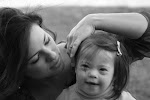
Look at this little pumpkin! We'd been home from the hospital for just a few weeks when I snapped this photo. Bridget was five pounds when she was born, but was already starting to put on some weight. When I see this picture, I realize that I am falling in love all over again. I also realize what my youngest daughter has been trying to tell me all along: "Mom, I am going to be okay!" Today, when Bridget coughs or trips, she shouts, "OH KAY!" She's started to anticipate me asking, "Are you okay?" (which I do every. single. time. she coughs, trips, clears her throat, etc.). When she was tiny, I worried about her health, how much she was eating, what she was hearing, seeing, learning. At every turn, she reassured me. I just needed to listen a little more closely...

Thursday, October 01, 2009

I Heart Someone with Down Syndrome

Today is the first day of Down Syndrome Awareness Month, and I will be taking part in "31 for 21"--a challenge to write or post each day of the month of October to advocate for people and families living with Down syndrome (31 days in honor of Trisomy 21).

I'll be sharing pictures, stories and updates on Bridget (including writing and thoughts from the rest of our family) and posting other items which shed light on disability and Down syndrome.

I wasn't blogging when Bridget was a baby, so I plan to post some highlights and pictures of Bridget's first few years that I have not yet written about here. I'll also re-post a few older items that many of you may not have seen.

If you are interested in (or have questions about) a particular area of Bridget's development, or our experience with a specific part of life with Bridget, please leave a comment or email me with questions or topic ideas. I hope to be able to give insight and comfort to parents who are new to this journey.

I look forward to reading about all of the other amazing people and families living with Ds!

Thursday, September 24, 2009

Bridget's Light

I've thought a lot recently about how best to explain and describe the impact Bridget has had on our lives. And then I realized I'd already written it. This is the essay I wrote, exactly as it appears in Gifts 2. This says it all...

Bridget’s Light


When our oldest two children were very small, we bought and renovated a traditional saltbox-style home to accommodate our growing family. The house sat on a gorgeous, deeply wooded lot which included a pleasing assortment of redbud, oak and buckeye trees. It took us a little while to figure out that while the house itself was perfect for us, the heavily treed lot, which initially attracted us to the property, meant that there were no visible sunsets and dark rooms even on the brightest of days.

When we designed our current home, I wanted windows in every room. “Light is vital,” I said to our architect as he drew up plans. “I don’t want to have to use lamps during the day any more.” He took the challenge seriously, as each and every contractor we met during the building process asked the same bewildered question: “You have how many windows?” It might’ve seemed excessive to some, but not to us. We’d lived in "the dark house" for several years before we fully recognized how much we crave and need natural light. It was several more years still before we realized that light itself would become a central theme in our lives.


As soon as we moved in to “the bright house,” everything seemed lighter in all senses of the word. Our four children (all under age six) were growing and thriving. We felt a new sense of buoyancy, a lightheartedness, and an unrestricted energy in our household. But as it turns out, the same windows that let light into a home can also let the darkness inside. Shortly after we moved, just as our lives were in full swing, I was diagnosed with a life-threatening brain tumor. Our world seemed to stop spinning, and dusk set in. It was an overwhelming, scary and sad time, and I secretly wondered whether night was closer than I cared to imagine.


The surgery to remove the tumor took my hearing on one side, but there were no other complications. I not only recovered quickly, but became pregnant with our fifth child just over a year later. We were thrilled and easily slipped back into a happy existence. Yet we were soon once again reminded that while windows provide openings to the outside world, they also let the outside world
in.

When Bridget was born with Down syndrome, none of us knew what to think, or how to feel. We had no experience with Down syndrome. We only knew the stereotypes, which brought sadness and concern. We grieved the loss of the happy time it should have been, and the loss of the baby we thought we were going to meet. But when we saw Bridget in the NICU for the first time, Chris and I both felt the heaviness and uncertainty begin to fade. We’d come around the corner from the nurses’ station to see her laying on a tiny hospital bed, covered in strong, unforgiving light from the warming lamps above. The lighting reminded me of a museum display featuring a rare and valuable piece of jewelry. As Bridget lay beneath it, nearly naked and fully illuminated, our hearts and lives were also laid bare. The light forced us to look at her, at ourselves, and our future. We watched her sleep peacefully, deserving and needing to be loved—just as any other baby. In that moment we realized Bridget is whole. We began to see her not as a child with a disability, but as a person, who would grow to express her own interests, talents, hopes and dreams—just as any other person. We began to understand her potential.


When the warming lights were turned off, there was still a glow that surrounded Bridget. She was radiant. It was unexpected, and we were both moved to tears when we realized that
she was the light.
***

The little girl with wispy ponytails who plays by my feet today does not yet know that I am writing about her. I’ve spent many hours these past few years telling our story, trying to show others that Down syndrome is not something to fear.

Down syndrome does not define Bridget. It is a part of her genetic make-up that is distinctly hers, but it is not her—and it doesn’t even begin to explain who she is. Bridget is a little masterpiece, with texture and depth and richness to spare. She gives freely of her effort and love. She is spirited and vibrant, content without being complacent. Others may feel that she has much to overcome, but Bridget doesn't seem to see it that way. In her we see honesty, lack of pretense, and uninhibited determination as she goes about her life with vigor and jubilance.


It’s interesting how a small amount of extra genetic material in Bridget translates into so much extra in all of our lives. Every day she encourages us to accept our own unique timelines for growth, and reminds us that what matters most isn’t what we achieve and when, but how true to ourselves we remain through the process of becoming. We’ve learned to accept that life is not always neat and tidy (or easy), and that plans can change mid-flight. We’ve also learned that situations we didn’t ask for or want often provide something we need.


A world turned upside-down reveals much about our perspective—it forces us to evaluate ourselves, the assumptions we make about one another, and our beliefs about ideals like success, beauty and perfection. And while Bridget has taught us significant life lessons, it is the small moments in everyday living with her—the countless little bursts—that fill our lives with meaning and joy. We spend our days together reflecting and accepting, learning, laughing, and loving. As a family, we’ve realized that we are not uncomfortable with disability; that we are not afraid of the darkness; and that everything seems better with more windows—and with Bridget in our lives. She has restored our sense of buoyancy.


Since our current home has natural light in abundance, it’s easy to forget that we once lived in a house with very little light. Likewise, it’s difficult to remember life before Bridget. What began with the bright light above her hospital bed and continued as her inner radiance has now developed into a substantial force of its own. Sometimes Bridget’s light is a high beam that illuminates clearly and at great range; at other times, it’s a gentle glow. But it is constant. With Bridget in our lives, our many-windowed home is luminous and vibrant once again. And even after night falls, sparkles are everywhere, filling every room and glittering with tiny flashes of light.

***

Wednesday, September 23, 2009

Throwing Money Away

Chris and I often joke about how we are practically throwing money away--on lots of things, but primarily--whenever we buy kids shoes. Every single one of our five kids has outgrown his or her shoes this past month (alright, Brian's tennies were so stinky that they had to be tossed out, but that is another story alltogether).

I had to tell Chris recently that our youngest daughter is actually throwing away money.

She is a careful citizen, and is greatly concerned with ridding the house of litter and choking hazards (she is also obsessed with the trash compactor, which might have a little to do with her loving the act of throwing things away). She gets very serious when she finds a tissue, a wrapper, the tiniest crumb, or a piece of cereal laying on the ground. She picks up the errant item and immediately goes to toss it.

I had forgotten to mention this until today, when I read about Malea pitching her mom's cell phone and remembered the crumpled dollar bill that I found in our trash a few weeks back.

I have caught her in the act of throwing away money, so I know Miss Bridget is the culprit. To her, apparently cash equals trash. We don't leave money all over the house, but if Bridget discovers any sitting out, we can kiss it goodbye. She'll grab a bill off the counter, crumple it into a tiny ball and head for the nearest trash can.

I'll have to have a little talk with her about the economy and the value of the dollar someday. For now, I'll keep an eagle eye trained on her at all times, and continue to chuckle about finding cash in the trash.

Thursday, September 17, 2009

Well. Well. Well.

Believe it or not, Miss Bridget has three new teeth (both of the lateral incisors on top--and one lateral incisor on the bottom)!

When we took her for her first visit to the dentist in June of this year, he'd said he thought a few of her baby teeth may be missing.

This explains why she has been a little cranky recently. Who would have guessed she'd be cutting teeth at three?

This child is full of surprises :)...

Tuesday, September 15, 2009

Sunday, September 13, 2009

Buddy Walk 2009

It was a gorgeous day for our local Buddy Walk! We did not have a team of our own (the Walk was early this year, and I knew the first part of September was going to be crazy busy for us), but we did get to enjoy a wonderful day filled with sunshine and friends. It was hot, and a little loud, and near naptime, so Miss Bridget was fairly quiet. She seemed to enjoy herself, though! She also greeted everyone she met with "knuckles" (she likes to say Boom!)

The highlight of our day was getting to meet a few other girls close to Bridget's age, including Leah Elliott and her family. Bridget and Leah were both tired, but were so cute together! My camera was out of batteries (!), so I did not capture any shots of the two of them together. Photographer Melissa Jones was there though, with the Elliott family, and may have one or two (I hope!).

Here are a few other pictures from today:


I don't know if I've mentioned it here, but Bridget's picture will be included in the NDSS Times Square Video this year which will run at the start of the NYC Buddy Walk on September 26th (it's this photo, taken with her Papa on the 4th of July):

Saturday, September 12, 2009

Love This...

I've been writing recently about the difficult balance between accepting and loving "what is" and trying to make things better for our kids.

Last night, I read an amazing and beautiful story from a father about life with his young son, who has cerebral palsy. It is lovingly written, descriptive and engaging. It says all I'd like to say and more. Go. Read. This. On Bloom.

Friday, September 11, 2009

Disability is Natural, Part III

I have no delusions that everyone is interested in reading book-length posts about our experiences in raising our family, or about my own personal philosophies, but the following may be helpful for those of you currently wading through the "therapy" dilemma. This is a fairly long post, so read on if this is a topic that is of interest to you :)...

There is a tremendous amount of pressure today to provide therapy–-and lots of it.

Everywhere you look within the disability community, you see it and feel it: it is all just too much.

As parents of children with disabilities and delays, we want desperately to help our children reach their potential. We love them. We believe in them. And there is so much "help" out there--so many services, therapies and interventions; new supplements and protocols; endless amounts of information on the web; other parents and doctors who see tremendous potential and are seeking answers and treatments--to make our hopeful visions of the future become reality.

At the same time, we begin to realize that (1) constantly seeking answers, treatments and interventions might suggest that we don't accept our children "as is", and (2) that we'll always feel like, despite huge effort, whatever we've done is not enough.

I don't really buy in to the philosophy that getting "help" means that we feel our children are somehow flawed, although I definitely see the danger in accepting services or interventions without having a firm idea of what that actually means. I see the pit parents can fall into by internalizing the language and processes of the service and medical systems, or in feeling the need to be therapists as much as parents.

As much as we see the abilities and potential in our children--and as much as we'd like to not point out their challenges--it is hard to deny that a child with delays or disabilities has areas of need. What many of us struggle with is how to address this without further pushing our children down the path of being "different"--without unknowingly encouraging their isolation from peers and community by placing them in "special" situations.

I never want Bridget to feel that she needs to be more like everyone else, that something is inherently "wrong" with her, or that her life is filled with "work". I want her to be connected and fulfilled.

And I completely intend to "help" her to do that, just as we have done and continue to do with all of our other children. All the kids deserve to have our support, our genuine interest and effort in providing every opportunity to live a full and happy life. They are all more than worth it.

(Kyle and Brian both have had speech therapy--not because we felt their speech delays were flaws, but because others were having a hard time understanding them which was adding undue frustration in their lives. Sara has had orthodontic intervention--okay, it was just a retainer--to correct her bite for function as well as aesthetics. You get the point. Without giving away information that my teenagers and pre-teens would have my neck for divulging here, there have been many other things we've utilized--from supplements to procedures to therapies to help our other children live full and happy lives.)

Most of the life-building, though, goes on at home. It is here that we are doing the most important work: we are helping to nurture the development of people. All the stuff that goes on outside the home, and outside the boundaries of our family (at school, at the doctor's office, in therapy), is only supplemental in nature and mostly by choice. The development of our children is primarily our responsibility, after all. Even without specific education or training, a parent's perspective and instincts trump all others.

We treat Bridget--and our decisions regarding her care--based on these beliefs. We are determined to be educated and to understand the things that are unique about her having Down syndrome. We also understand that she is a person in her own right, and that Ds is only one aspect of Bridget. We realize that certain accommodations or assistance will benefit her and make it easier for her to learn and grow as an individual. We have always included her fully in our family life, and have worked teaching and wellness into our normal, daily routine. Bridget has more than her fair share of doctor's appointments (mostly for well-checks, routine testing or follow-ups), but we all understand that it is to keep her healthy and able to learn and enjoy life. We would (and do) do the same for each of the people in our family.

This all brings me back to Kathie Snow's bio (which is available on the Disability is Natural website), where a few sentences really stood out (Snow is talking here about leadership training she participated in for adults with developmental disabilities and for parents of children with developmental disabilities):

[The training] was life-changing, and it validated my hopes and beliefs that my son and others with disabilities, and their families, could enjoy rich, full, ordinary lives. Our family didn't want a “special” life; we wanted an ordinary life.
This describes so clearly the simple wish we have for Bridget, and for our lives with her. Is it possible?

Again, from Snow's bio page (talking about her approach with her son):

We found more natural ways of helping Benjamin do what he wanted to do (instead of trying to force him to do what professionals thought was important). It's not that therapists and other service providers aren't helpful and valuable; they are. We just need their help in different ways. We need them, as consultants, to teach us—parents, teachers, day care providers, and others—how to incorporate beneficial activities throughout a person’s day, in natural environments, and to do so in ways that do not send the “not-okay” message. And that’s what we did.
And it is what we have been doing--"by feel". It is what feels right, what intuitively we know is best for Bridget. Each individual, and each family, is unique and what's right for one person may not be what's best for another. But this is where we are today.

We have agreed to partner with specialists, educators, and doctors to help Bridget when it benefits one of three areas: that is, the activity, appointment, intervention, therapy, procedure or supplement has to help Bridget to be more happy, more healthy or more independent. If it doesn't fit into one of those categories, it is not important to her, therefore is not worthwhile to do.

We follow her lead, and enjoy every minute with her. I write and manage this blog to show others how much Bridget is loved, how full of potential she is, and how much she has to offer the world.

Her human worth is not tied to her achievements, though she is capable of so much.

She is interesting and funny and talented, all in her own right. She deserves to make her own way in this world, even if it requires a little extra "help".

I'm excited to see where she's headed. I love that I get to take this journey with her...